Fraud Blocker

Psychiatrist near Fort Lauderdale, Florida 

3015 N Ocean Blvd, STE C101 Fort Lauderdale, FL 33308

Office hour: Mon-Sat:  9:00am – 5:00pm

Emergencies: 911

Post-Traumatic Stress Disorder (PTSD)

Post-Traumatic Stress Disorder treatment at One Stop Psychiatry in Florida

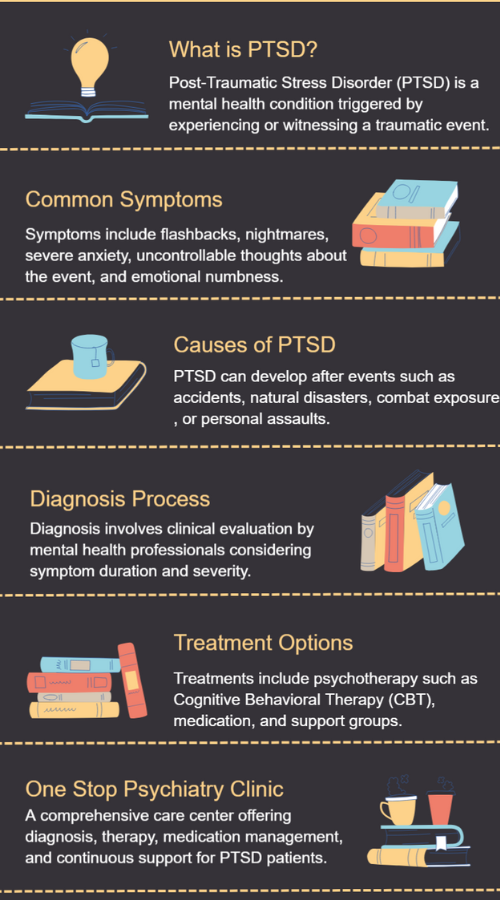
Post-traumatic stress disorder (PTSD) is a widespread mental health issue that can occur after experiencing a traumatic event. It includes symptoms like flashbacks, anxiety, negative thoughts and beliefs, hypervigilance, and more.

At One Stop Psychiatry, our professional team provides evidence-based treatment for PTSD, e.g, psychotherapy, also known as talk therapy. We offer both telepsychiatry and in-person treatment options in Florida.


What is Post-Traumatic Stress Disorder (PTSD)?

Post-Traumatic Stress Disorder (PTSD) is a mental health condition that can develop in individuals who have experienced or witnessed a traumatic event. This may involve military combat, physical or sexual assault, natural disasters, accidents, abuse, or the sudden death of a loved one. The emotional and psychological responses to these events can lead to long-term effects that extend significantly beyond the event itself.

The symptoms of Post-Traumatic Stress Disorder (PTSD) fall into four categories

Intrusive memories


    • Intrusive thoughts, such as repeated, involuntary memories.

    • Nightmares.

    • Flashbacks of the traumatic event, which can be very vivid and feel real.

Negative change in Mood and cognitive symptoms


    • Sensations of loneliness and alienation from other people

    • Ignoring or having trouble recalling significant details of the traumatic experience

    • Having trouble experiencing happy feelings

    • Negative feelings like shame, guilt, or fear

Avoidance Behaviors


    • Avoiding people, places, or conversations related to the trauma

    • Withdrawing from social activities or loved ones

Arousal reactivity symptoms


    • Challenges with concentration

    • Sleep issues, including trouble falling asleep or staying asleep, excessive sleeping, or diminished sleep quality

    • Participating in risky behaviors

    • Feeling tense or on edge

    • Irritability and angry episodes.

Types of Post-Traumatic Stress Disorder (PTSD)

While PTSD is often generalized, mental health professionals recognize different types:


    1. Normal Stress Response – Occurs after a traumatic event but typically improves with support and self-care.

    1. Acute Stress Disorder (ASD) – Symptoms last less than a month but may develop into chronic PTSD if untreated.

    1. Uncomplicated PTSD – Involves clear symptoms such as flashbacks and avoidance, without other mental health disorders.

    1. Complex PTSD (C-PTSD) – Develops from long-term or repeated trauma, such as ongoing abuse or neglect.

Comorbid PTSD – When PTSD occurs alongside other mental health conditions such as depression, anxiety, or substance use disorder.
Post-traumatic stress disorder (ptsd) ptsd

How is PTSD diagnosed?

An accurate diagnosis of PTSD involves self-report assessment and physical examination, or a psychological test.

A psychiatrist, psychologist, or social worker typically is the one to diagnose and treat individuals with symptoms of PTSD.

Being open with your clinician will help you get an accurate diagnosis. PTSD may be diagnosed when symptoms last more than a month after the traumatic event. Some of the symptoms are able to clear up in the course of months, and in some cases it takes years.

Treatment of PTSD at One Stop Psychiatry

Evidence-Based Therapies

We draw upon evidence-based therapeutic modalities, including:

Trauma-Focused Cognitive Behavioral Therapy (TF-CBT): Aims to recognize and challenge negative thoughts that develop in response to the trauma.

Eye Movement Desensitization and Reprocessing (EMDR): A therapy treatment to reduce the emotional effects of painful memories.

Prolonged Exposure Therapy: Encourages lesser fear and avoidance by directly facing cues related to trauma in a safe setting.

Medication Management

Medication can be helpful for some people in controlling their symptoms — such as anxiety, depression, or sleep disturbance. Our psychiatrists assess your needs and consider options that would be the most efficacious and safe for you.

The experience of PTSD can be quite overwhelming, but it is essential to remember that recovery is within reach. With the right combination of therapy, medication, and support, individuals can conquer the challenges of trauma and move towards a healthier, more fulfilling life.

How One Stop Psychiatry Can Help with PTSD?

If you or someone you know is dealing with PTSD, professional help is readily available. At One Stop Psychiatry, we offer both telepsychiatry and in-person treatment options in Florida, tailored to your individual needs.

Find a psychiatrist near you and schedule an appointment today—we’re here to support you every step of the way with the treatment and resources needed for a healthier, happier future. Call us at: (754) 270-6322


Featured Articles

Featured video

Learn more about mental health conditions and how they can effect you or your loved ones

Healthy Newsletter

You can subscribe to our weekly letter focused on mental health education

Methadone: A Lifesaving Treatment for Opioid Addiction

Methadone is a medication that has been used for decades to treat opioid addiction. It works by binding to the same receptors in the brain as opioids, but without producing the same high. This can help to reduce cravings and withdrawal symptoms, making it easier for people to stop using opioids.

What is Methadone?

Methadone is a medication that is used to treat opioid addiction. It is a long-acting synthetic opioid that is similar to morphine. Methadone is taken orally and works by binding to the same brain receptors as opioids, but it produces a much weaker effect. This reduces the risk of overdose and decreases the intensity of withdrawal symptoms.

Read More »

Mental Health Awareness: Simple Ways We Can Support Ourselves and Others

When we hear “first aid,” most of us think about a bandage, maybe some CPR, right? But mental health first aid? Now that’s something we don’t talk about nearly enough. And it’s probably just as important—if not more. You see, mental health touches every part of our lives. It affects how we think, feel, and interact with the world. Yet, so many of us either ignore it or don’t know what to do when things start to feel off.

So, let’s get real. Mental health awareness is on the rise, and that’s great. But how do we actually take care of ourselves or support the people around us? You don’t have to be a therapist to make a difference. Just knowing some basics—like how to spot when someone’s struggling or what small steps you can take—can be a real game-changer. Let’s dig into this together.

Read More »

Panic Attack Survival Guide: Easy Self-Care Tips for Overcoming Anxiety

Have you ever been going about your day when, out of nowhere, your heart starts racing? Maybe you feel like you can’t catch your breath, or it feels like the walls are closing in. It’s scary, right? If you’ve had a moment like this, it might have been a panic attack. And guess what? You’re not alone. Panic attacks are way more common than you think, and they can happen to anyone.

The good news is, you can get through them. They’re uncomfortable, for sure, but with a little know-how, they don’t have to control your life.

Read More »

Is Suboxone® Right for You? A Guide to Buprenorphine and Naloxone Treatment

Suboxone is a medication that is used to treat opioid addiction. It is a combination of two drugs, buprenorphine, and naloxone. Buprenorphine is an opioid agonist, which means it binds to the same receptors in the brain as other opioids such as heroin and morphine. Naloxone is an opioid antagonist, which means it blocks the effects of opioids. Suboxone is taken as a tablet or film that is placed under the tongue or inside the cheek. It is usually taken once a day.

Suboxone is used as part of a complete treatment program that includes counseling and behavioral therapy. It should not be used if you are pregnant or breastfeeding. You should not drink alcohol or use other drugs while taking Suboxone. If you stop taking Suboxone suddenly, you may experience withdrawal symptoms such as anxiety, sweating, shaking, nausea, and diarrhea.

Read More »

Have a question?

Get our weekly Mental Health newsletter

Evidence-based guidance, up-to-date resources, and first-hand accounts to help you in your mental health journey.